Amy Glasmeier and Taimor Williams, 2019

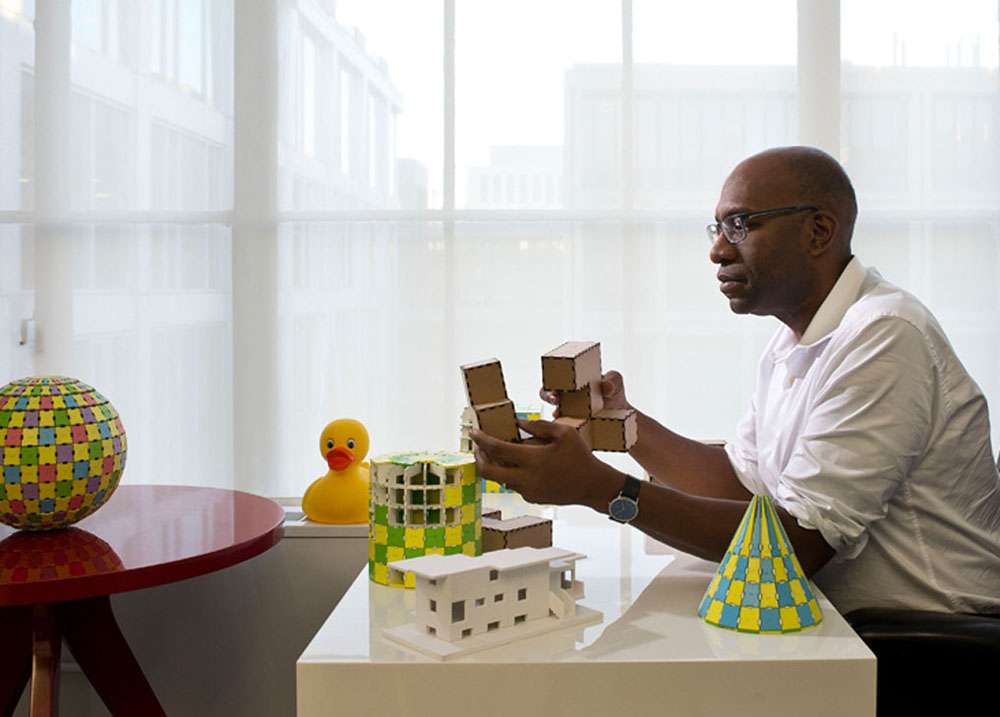
Prof. Amy Glasmeier (left) and MIT sophomore Taimor Williams discuss his research project on cascading failures in critical infrastructure systems, February 2019.
"You don't learn this in class"
by Aaron Weber, MIT News, 4 January 2019 [excerpt]
MIT’s Undergraduate Research Opportunities Program (UROP) gives students the opportunity to do advanced work alongside professors and graduate students. Danielson, the director of education for the MIT Energy Initiative (MITEI), says undergraduate research isn’t just one of the “best-known and best-loved” features of the undergraduate experience at MIT.
In the lab
“I’ve learned that as a principal investigator it’s critical to have a good match between the lab’s needs and the student’s needs,” says [Amy] Glasmeier, a professor of economic geography and regional planning. After all, she explains, undergraduate researchers aren’t just assistants or technicians. They require additional engagement with faculty and graduate students before their work can contribute to a larger research project.
For example, she says, students who are mostly familiar with clearly delineated problem sets and calculations might struggle with nonstandard, unstructured data or project instruction. Her 2018 summer student, then-rising sophomore mechanical engineering major Taimor Williams ['21], quickly vaulted over that obstacle. “Taimor has the intellectual flexibility and adaptability this project needs. I was able to just give him a big stack of reading on grid design, energy policy, data structures, and physics, to put it all in context,” says Glasmeier.
That’s important, she believes, because “you need the context of multiple scientific disciplines as well as social sciences and humanities to make the work relevant.”
Williams is characteristically modest about the amount of work he did to get started, saying only that “it was a lot of information, but manageable.” With an understanding of the literature in hand, Williams moved on to organizing qualitative descriptions of past electric system failures into data sets that can be analyzed programmatically. The ultimate goal is to identify patterns of system behavior that can be used to predict and prevent future outages.