Eleanor Roosevelt and Charles Anderson, 1941

Eleanor Roosevelt (center) and Charles E. Anderson (right) at Tuskegee Army Air Field, 11 April 1941. She had insisted that the flight be photographed, and immediately developed the film in order to take the photos back to Washington and persuade FDR to activate the Tuskegee Airmen in North Africa and in the European Theater of World War II.
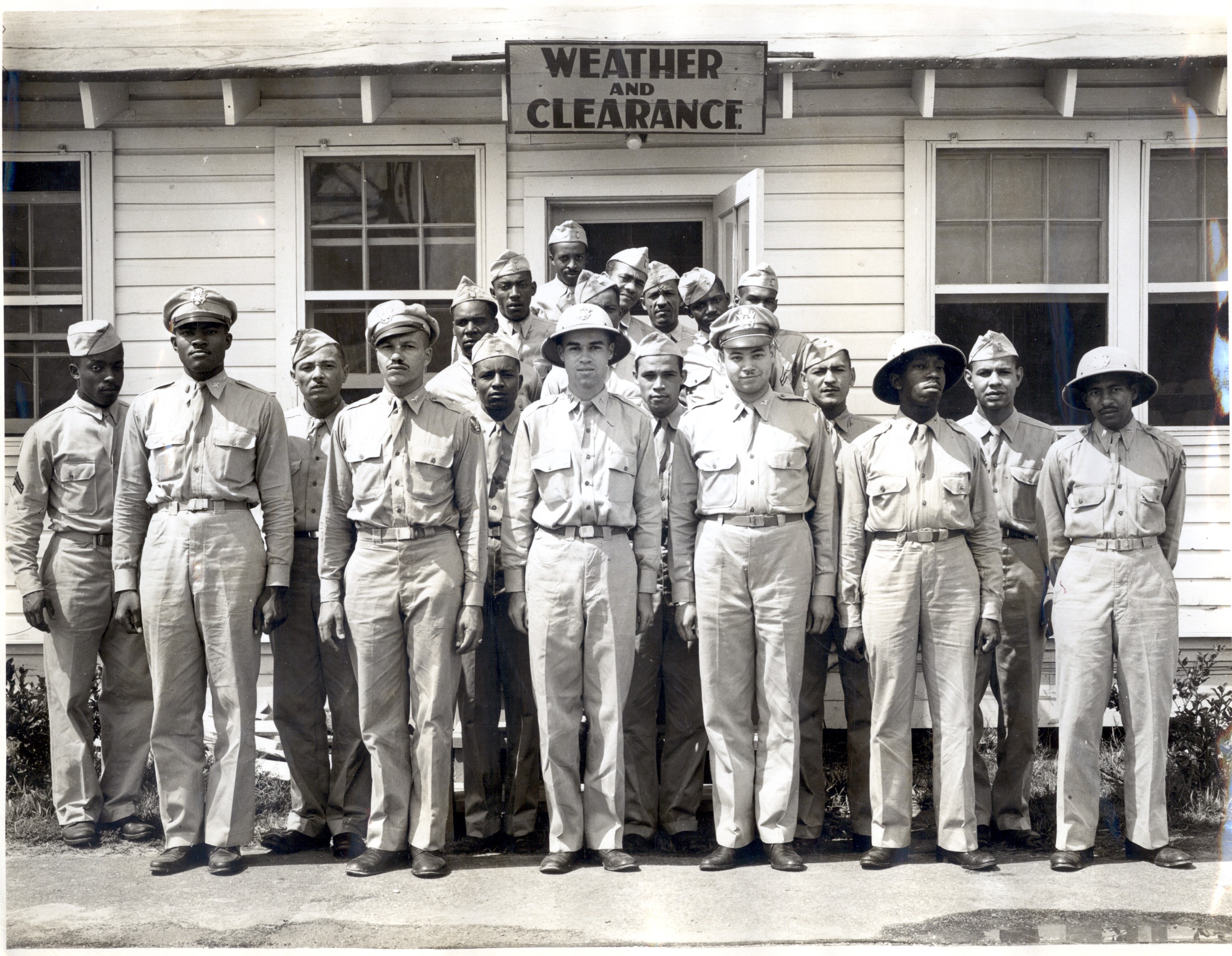
Under the direction of Charles Alfred "Chief" Anderson [MIT PhD '60], the pioneering airmen practiced at Moton Field, a tiny airstrip surrounded by marshes and stands of pine near [Tuskegee Institute].
During their flight training, the airmen were denied rifles because the airstrip was in Alabama, a deeply segregated state where some folks didn't like the idea of blacks shooting at whites --- even if they were the enemy.
The drills became bittersweet to the airmen, whose hopes of flying dimmed as they waited and waited for a call-up from the government. After months of waiting, their spirits were restored by a visitor to the airstrip.
"I've always heard colored people can't fly, but I see them flying around here," Eleanor Roosevelt reportedly said during her visit [to the Tuskegee Army Air Field in 1941]. Against the objections of her security men, the open-minded, free-spirited first lady asked to fly with Anderson.
Using her political connections, Roosevelt convinced her husband to use his influence to give the airmen a chance to fight --- especially since the military was facing a critical shortage of pilots.
The Tuskegee Airmen not only broke the color line, they shattered stereotypes about black pilots.