MIT Students Pre-Class of 1930
A Pioneer Cohort

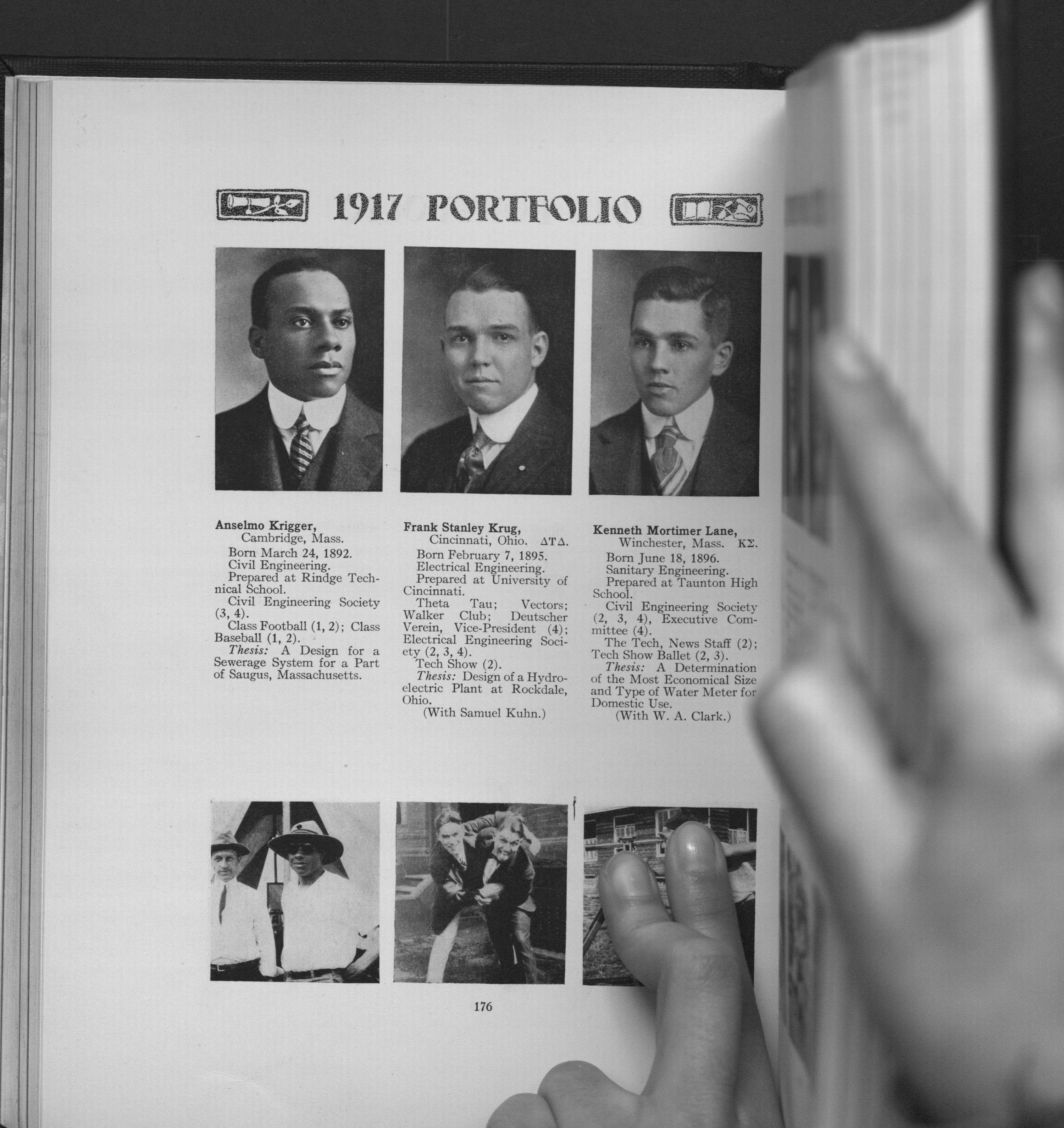
Drawn from an undergraduate thesis by Dianna Abney '83, this story documents the earliest known Black students at MIT before the Class of 1930, a luminous collective portrait of pioneers who navigated the Institute in its first decades.
Historical Context
From the mid–to late nineteenth to World War I (1914-1918), only a few students of color are able to take advantage of educational opportunities. The majority of the Black population on campus works as janitorial or service staff. Prior to World Wars I and II there is already labor unrest and increased concern about racial and ethnic problems nationwide. The 1920s indicate a slight increase in the number of black students, which decreases during the Great Depression of the 1930s.
That early black students did not always perform well academically was not unusual—MIT was a tough school even then. Between 1869 and 1902, an average of only 50.4% of all entering students graduated with their class. Some took longer than the prescribed length of time, others simply dropped out. A few became influential educators, others pioneers in the fields of medicine, science and engineering. The were those whose lives faded into history, others whose paths crossed with prominent leaders like Booker T. Washington, W.E.B. Dubois, and John Hope. Viewed in its proper historical perspective, however, this pioneer cohort of MIT students forms a luminous collective portrait.
Thesis Project
In 1983, biology major Dianna Elizabeth Abney ’83 wrote an undergraduate thesis entitled "Notes on Researching Blacks at MIT prior to the Class of 1930". Abney is among the various individuals who at some point or another undertook projects to document the history of the black experience at the Institute. Black Alumni/ae at MIT (BAMIT) members initially suggested the project to Abney as a historical presentation for the Black Students’ Conference on Science and Technology during the 1980s. Abney compiled data on black students prior to 1929, such as: course of study; date of birth; home address; secondary school; date of MIT entry; Institute sports and club memberships; and post-graduation occupation and address. Historian Kenneth Manning and writer Marilyn Richardson served on Abney's thesis committee.